
You are about to approve a DeFi transaction when the number on your screen looks familiar—but the contract address does not. The fee estimate seems unusually high, the token allowance is broader than expected, and a rushed click could expose far more than the trade itself. This is the kind of moment in which a browser wallet is not merely a password manager with a pop-up window. It is an interpretation layer between you and an application that may be executing complex smart-contract logic.
That is why installing a wallet extension should be treated as a security decision, not a routine download. Rabby is designed for users interacting with decentralized applications across Ethereum-compatible networks, where transaction simulation, chain selection, permissions, and gas settings all matter. Yet no wallet can make an unsafe protocol safe. The useful question is not whether an extension “protects” you in the abstract, but which risks it can surface, which decisions remain yours, and how its information can improve your judgment.
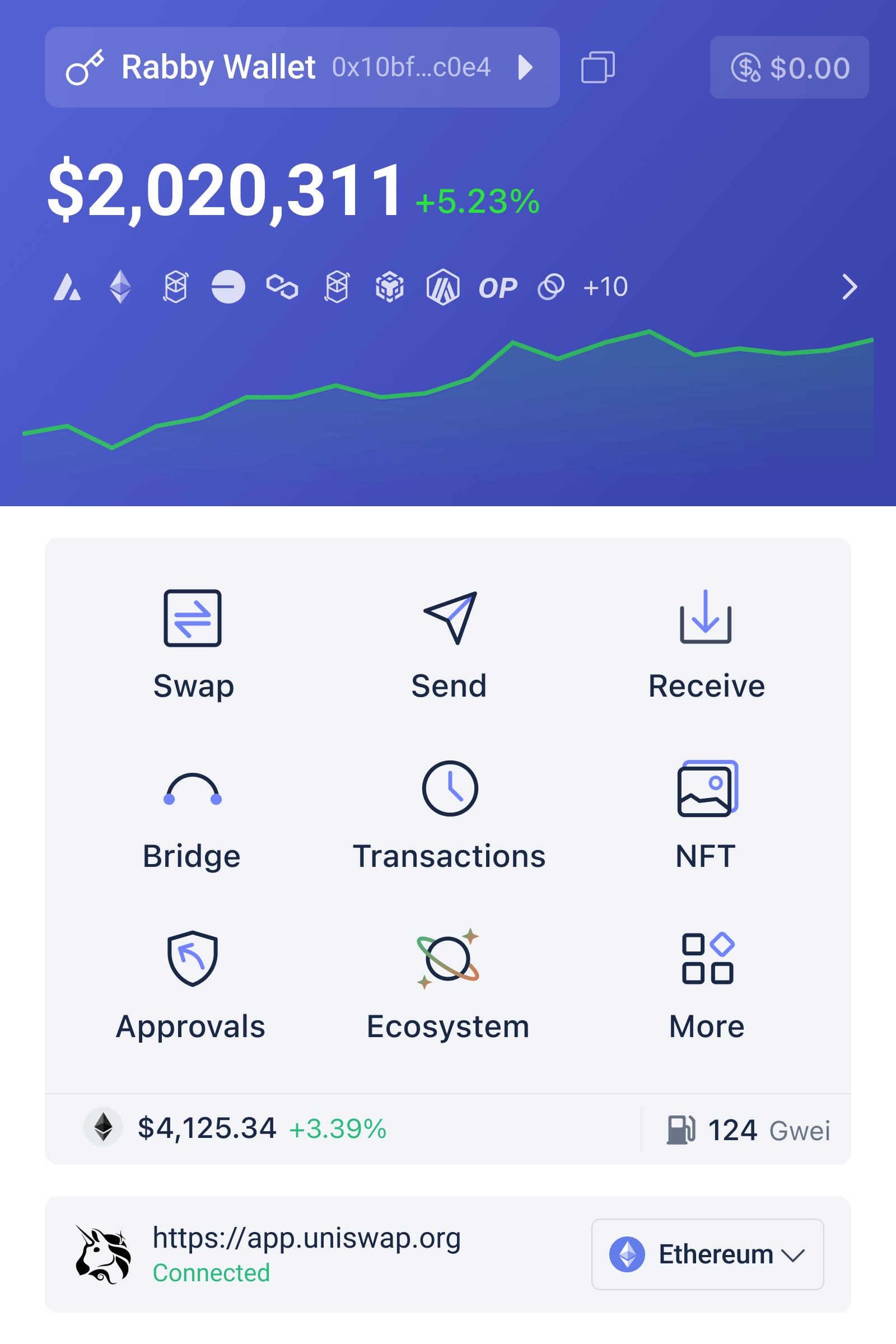
Start with the installation boundary
The first security boundary exists before the extension is installed. A convincing wallet interface can be copied, and search results can be manipulated. Users in the United States should be especially wary of sponsored results, unsolicited direct messages, fake support accounts, and “urgent” prompts claiming that a wallet must be re-synced. Never enter a recovery phrase into a website, form, chat window, or extension pop-up that you did not deliberately open.
Use a trusted source and inspect the browser’s extension details before proceeding. If you are comparing installation instructions, this rabby extension download page may help orient the process, but the practical rule is broader: verify the source independently, check the publisher information, and confirm that the extension behaves consistently after installation. A legitimate download does not eliminate the need to validate the specific website, contract, and transaction you later use.
Once installed, create or import a wallet only through the extension’s own controlled flow. A recovery phrase is the root credential: anyone who obtains it can generally recreate control of the wallet elsewhere. Store it offline in a secure location, avoid screenshots and cloud notes, and do not confuse a browser password with custody of the underlying assets. The password may protect access on one device; the recovery phrase determines whether the wallet can be restored.
What a DeFi wallet can actually inspect
To understand Rabby-style transaction warnings, it helps to separate three layers of a DeFi interaction. The first is the user interface: a lending dashboard, decentralized exchange, bridge, or yield application. The second is the wallet request, which contains the target contract, method, token amounts, gas parameters, and sometimes an approval allowance. The third is the smart contract itself, which interprets the request according to code and current blockchain state.
A wallet can read and explain parts of the second layer. It may identify the network, show the destination contract, estimate asset changes, simulate an outcome, or flag a potentially risky approval. These functions are valuable because raw transaction data is difficult for most people to interpret. Simulation can turn an opaque instruction into a more practical question: “If I sign this, what assets and permissions are likely to change?”
That mechanism has an important limit. A simulation is an estimate under particular assumptions and a particular blockchain state. Between simulation and confirmation, another transaction may change liquidity, an oracle value may update, or a contract may behave differently under conditions the simulation does not capture. A warning system can reduce avoidable mistakes, but it is not a formal proof that the protocol is solvent, honest, or economically safe.
The distinction between a transaction and an approval is also easy to miss. A swap may authorize a contract to spend a specified token amount, while a poorly considered approval may grant spending power far beyond the immediate trade. Unlimited approvals can be convenient because they reduce repeated confirmations, but they expand the damage if the contract or account interaction later becomes compromised. A cautious user should ask whether the allowance matches the intended use and whether revoking unused permissions is worth the additional network fee.
Gas optimization begins with transaction design
“Gas” is the computational fee paid to validators or network operators for processing an on-chain action. On Ethereum-compatible networks, the final cost depends on both the amount of computation and the network’s current demand. The wallet can estimate a suitable fee, but it cannot guarantee a particular execution price when conditions are changing. A low fee may delay or fail; a high fee may confirm quickly but waste money.
For a user, gas optimization is therefore not simply choosing the lowest number in a fee menu. It is a decision about urgency, execution risk, and the value of the transaction. A failed transaction can still consume gas, because the network processed the attempted computation even if the contract reverted. In contrast, waiting for calmer conditions may save money but expose a trade to price movement or cause a time-sensitive opportunity to disappear.
A useful mental model is to optimize the whole action rather than the fee alone. Combining compatible actions can sometimes reduce repeated setup costs, but complex calls may be harder to inspect and can introduce additional contract risk. Approving an exact amount may improve security, yet it may require another approval later. Choosing a different network may lower fees, but it can add bridge risk, fragmented liquidity, or a less mature application ecosystem.
Before confirming, review the network, the recipient or contract, the asset being spent, the expected asset received, the minimum acceptable output, and the deadline. Slippage—the permitted difference between an expected and final trade price—is not a free safety setting. A very tight limit can cause a transaction to fail during volatility; a wide limit can allow a poor execution. The right value depends on liquidity, market movement, and the design of the application.
Wallet fee recommendations are useful inputs, not commands. If a transaction is not time-sensitive, a user can compare the suggested setting with current network conditions and consider waiting. If a transaction is time-sensitive, the user should understand what faster confirmation is buying. The apparent bargain of a lower gas setting may disappear if the transaction expires, fails, or leaves a position exposed to a changing market.
Security warnings are decision aids, not verdicts
Risk labels and simulation results are best treated as evidence in a broader investigation. A warning may reflect a known malicious address, unusual contract behavior, an unsupported token, or an inability to simulate the call reliably. Conversely, the absence of a warning does not mean a protocol is safe. A new exploit may not yet be recognized, and a malicious contract can behave normally during one inspection while remaining dangerous under another condition.
This is where user discipline matters. Compare the domain name with the one you intended to visit. Be suspicious when a site asks you to connect a different account or network. Read approval requests instead of clicking through them. If the transaction involves a bridge, lending market, or unfamiliar token, investigate the economic mechanism separately from the wallet interface. A clean-looking confirmation screen cannot evaluate every governance, oracle, liquidity, or counterparty risk embedded in the protocol.
Hardware wallets can add another layer by keeping signing keys in a dedicated device, but they do not make a deceptive transaction harmless. The hardware device may protect the key while the user still approves a malicious transfer. Security is layered: secure installation, private-key protection, careful website selection, transaction interpretation, allowance management, and post-transaction monitoring each address a different failure mode.
A repeatable workflow for US DeFi users
For routine activity, a short checklist is more reliable than confidence. First, separate a primary wallet holding substantial assets from a lower-balance wallet used for experimentation. Second, connect only to applications you reached through a trusted route. Third, inspect the wallet’s transaction summary and pause if the result is different from the application’s description. Fourth, treat unexpected approvals, unfamiliar networks, and requests to sign arbitrary messages as reasons to investigate rather than obstacles to bypass.
It is also sensible to test unfamiliar applications with a small amount. This does not prove that a protocol is safe, but it limits the initial exposure and gives you a chance to observe the transaction sequence. Keep records of which permissions you granted and review them periodically. If an asset appears in a wallet unexpectedly, do not assume that interacting with it is necessary; unsolicited tokens are sometimes used to lure users into malicious websites or contracts.
For larger positions, consider operational separation. A wallet used for long-term holdings does not need to be the same wallet used for every new liquidity pool or token launch. This approach creates inconvenience and may require more network fees, but it reduces the chance that one mistaken approval affects the entire balance. The trade-off is practical: stronger compartmentalization increases friction, and excessive friction can lead users to take unsafe shortcuts. The best system is one you will consistently follow.
What to watch as wallet tooling evolves
Wallets are likely to become better at translating contract calls into human-readable consequences, especially as simulation and intent-based transaction systems mature. If those tools become more accurate and easier to compare, they could reduce the gap between what a DeFi application promises and what a signed transaction actually does. The important signal will not be more colorful warnings; it will be whether users can understand why a warning appeared and what uncertainty remains.
Gas management may also move toward more automated choices across networks and transaction types. That could make routine actions cheaper, but automation creates its own boundary: a system optimizing for cost might not understand that a trade is time-sensitive, that a bridge has elevated risk, or that a user values execution certainty over a small saving. The likely best outcome is assisted decision-making, not blind optimization.
For now, the clearest principle is simple: a wallet extension improves the quality of a decision only when the user reads the information it provides. Rabby can help make transaction effects, network context, and possible risks more visible. It cannot replace independent verification, protect a recovery phrase that has been exposed, or guarantee that a DeFi protocol will behave honestly. Download carefully, sign deliberately, and optimize gas as part of the entire transaction—not as an isolated number.
Frequently asked questions
Is installing a browser wallet enough to secure my DeFi activity?
No. A wallet can protect key access and provide transaction information, but security also depends on the download source, recovery-phrase handling, website verification, contract risk, approval limits, and the choices made before signing. Treat wallet warnings as useful signals rather than guarantees.
What is the safest way to reduce gas costs?
Start by deciding whether the transaction is urgent. If it is not, waiting for lower demand may help. Review whether the action can be simplified, avoid unnecessary approvals, and choose a network only after considering liquidity and bridge risk. Never reduce the fee so aggressively that failure or delay is more costly than the potential saving.
Should I approve an unlimited token allowance?
An unlimited allowance can make repeated interactions more convenient, but it gives the approved contract broader spending authority. An exact or limited approval may require more confirmations and possibly more gas, yet it narrows the potential loss if the contract or account interaction later becomes unsafe. The appropriate choice depends on convenience, exposure, and how often you use the application.